


CONSERVATION EDUCATION
Soil
Healthy soil isn't just dirt - it's a living, breathing system full of organisms, organic matter, and nutrients that make everything else possible. In South Dakota, soil is the foundation of farming, ranching, wildlife habitat, and clean water. Without it, none of it works.

What makes South Dakota's soil remarkable?
South Dakota has over 550 identified soil types across the state. Scientists estimate it takes 500 years to form just one inch of topsoil, which means the soil under your feet took longer to form than the United States has existed.
That soil isn’t the same across the state either. The Missouri River divides two very different soil stories:
-
East of the river, deep organic-rich soils and reliable rainfall make this some of the most productive farmland in the world.
-
West of the river, less rainfall means less plant growth and less organic matter in the soil. Many areas have a heavy clay locals call “gumbo.” It’s rock-hard when dry and sticky when wet, making the land better suited to grazing and ranching.
And the soil beneath your feet is far more alive than it looks. A single teaspoon of healthy soil contains more microorganisms than there are people on Earth!

STATE SOIL OF SOUTH DAKOTA
Houdek (pronounced hoo-deck)
First identified in Spink County in 1955 and designated South Dakota's official state soil in 1990, Houdek is a deep, well-drained loam found nowhere else in the world. Its rich dark color comes from 2–4% organic matter built up from thousands of years of decomposing prairie grass, the same process that makes it one of the most productive agricultural soils on earth.
550+
identified soil types across South Dakota
500
years to form just one inch of topsoil
2M+
acres of Houdek soil, found nowhere else on earth
What threatens South Dakota soil?

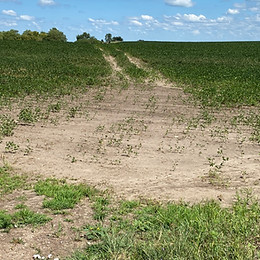
Erosion
Wind and water carry away topsoil faster than it can be replaced, especially on bare or tilled fields. South Dakota loses millions of tons of topsoil to erosion every year.

.jpg)
What can people do?
Conservation practices can slow and even reverse soil loss. These aren't just for large-scale farmers, homeowners, gardeners, and landowners of all kinds can make a difference.
Cover Crops
Most farm fields sit bare after harvest, but they don't have to. Cover crops like winter rye, hairy vetch, and tillage radishes are planted in the off-season specifically to keep the soil covered, roots in the ground, and biology active. They prevent erosion, build organic matter, and protect soil that would otherwise be exposed to wind and rain all winter.
No-till Farming
Traditional plowing turns the soil over between growing seasons, but that disruption breaks down soil structure and releases carbon into the air. No-till farming skips the plow entirely, leaving the soil undisturbed. Over time, the soil becomes healthier, holds water better, and erodes far less.
Grassed Waterways
When rain falls on a field, water naturally flows toward low points and drains off the land, taking topsoil with it. A grassed waterway is a strip of grass planted along those drainage paths. The grass slows the water down, filters out sediment, and keeps it from carrying soil into nearby streams and rivers.
Composting
Composting turns food scraps, yard waste, and organic material into rich, dark matter that feeds soil biology. Even a backyard compost pile makes a difference, returning nutrients to the ground and reducing the need for synthetic fertilizers.
Windbreaks/Shelterbelts
Rows of trees and shrubs planted along the edges of fields and properties aren't just there for looks, they're one of the oldest and most effective conservation tools on the Great Plains. By blocking wind, they protect topsoil from blowing away, shield crops and livestock from harsh weather, and create habitat for birds and wildlife.
Talk to your local district
Not sure where to start on your own land? South Dakota has conservation districts across the state staffed with people who know your local soil, landscape, and conditions. They can help you figure out which practices make sense for your situation.
FOR EDUCATORS & CLASSROOMS
Bring soil to life in your classroom!
Hands-on soil activities help students connect what they learn to the ground under their feet. Explore trusted partner resources below that are South Dakota relevant and ready to use.
PARTNER WEBSITES
K-12
SD Soil Health Coalition
A hub of SD-specific soil education including "The Soil Quilt" children's book set on a SD farm, a free soil coloring page, a soil biology poster, and the Mighty Mini Microbe coloring book. Also offers Soil Health Buckets - 18 accredited lesson plans with hands-on equipment available to vo-ag and science classrooms.
PDF DOCUMENTS